2026-10-17 ·
Humidity Control Steps for Verdugo City Homes in Summer
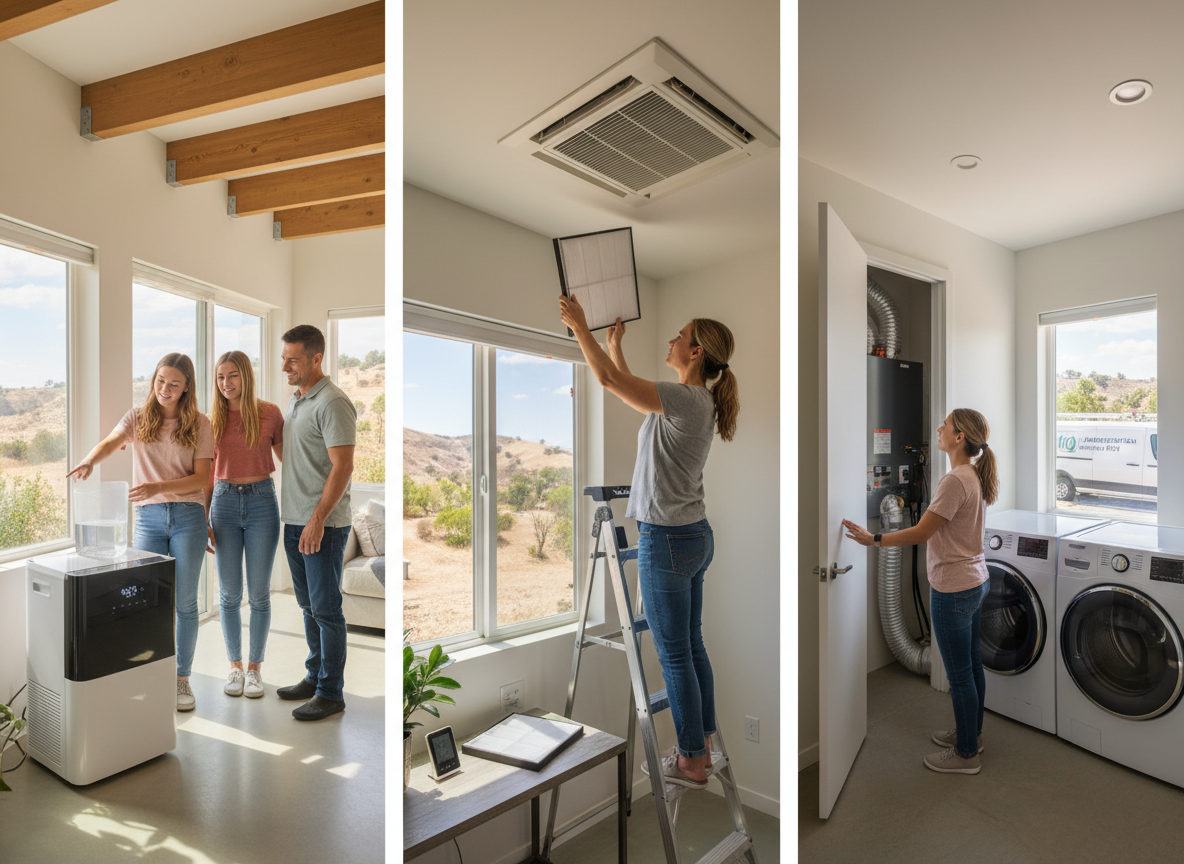
Verdugo City homes need indoor relative humidity kept between 40 and 50 percent during summer months to limit mold growth, achieved through consistent monitoring, targeted ventilation, and dehumidification that accounts for the area's Mediterranean climate with warm dry summers.
Understanding Summer Moisture Patterns in Verdugo City
Verdugo City sits in Los Angeles County where Mediterranean conditions produce hot days with low outdoor humidity yet trap moisture inside older housing stock common throughout the area. Homes built before 1980 in neighborhoods near 2820 Honolulu Ave often feature single-pane windows and limited insulation that allow warm air to cool on surfaces and create condensation once temperatures drop at night. Residents in adjacent La Crescenta-Montrose and Glendale report similar issues when swamp coolers or kitchen exhaust fans pull in outside air that later condenses in attics and crawl spaces. These patterns differ from coastal zones because inland heat drives residents to close homes during peak afternoon hours, concentrating indoor moisture from cooking, showers, and breathing. Checking humidity at multiple points daily reveals spikes that standard air conditioning alone may not resolve.
Monitoring Humidity Levels Accurately
Place digital hygrometers in living areas, bedrooms, and basements to track readings every few hours during July and August when indoor levels can climb above 55 percent even on dry days. Record morning and evening values because temperature swings of 20 degrees or more between day and night in Verdugo City directly affect condensation risk on cooler surfaces. Adjust habits when readings exceed 50 percent by running bathroom exhaust fans for 20 minutes after showers or using range hoods while cooking. Homeowners who track data over a week often identify specific rooms where poor airflow keeps moisture elevated. Consistent logging also helps decide when to add supplemental dehumidification rather than relying solely on central systems sized for drier coastal conditions.
Ventilation Strategies That Work Locally
Open windows on the shaded side of the house during early morning hours before 9 a.m. when outdoor air remains cooler and drier, then close them as temperatures rise to prevent warm moist air from entering. Install or upgrade bathroom and kitchen exhaust fans venting directly outside rather than into attics, a common issue in pre-1980 Verdugo City construction. Whole-house fans can exchange air quickly in the evening once outdoor temperatures fall below indoor levels. For homes near Glendale or La Crescenta-Montrose where hillside locations create variable wind patterns, position intake vents to capture prevailing breezes without drawing in dust that carries spores. These steps reduce reliance on mechanical cooling while keeping relative humidity stable without over-ventilating during peak heat.
Using Dehumidifiers and Sealing Measures
Select portable dehumidifiers rated for 50 to 70 pint daily capacity for typical 1,500 to 2,500 square foot Verdugo City homes when central air cannot maintain target levels. Empty collection tanks daily or connect to a drain to avoid overflow that adds moisture back into the space. Seal obvious air leaks around windows and doors with weatherstripping rated for high temperatures to prevent humid outdoor air infiltration during the warm dry summers. Focus first on bathrooms and laundry rooms where daily water use creates the largest moisture loads. Running units continuously in problem areas for 8 to 12 hours can drop humidity by 10 to 15 percentage points within two days when combined with the monitoring routine described earlier.
Protecting Older Homes from Hidden Moisture
Pre-1980 houses common in Verdugo City often have crawl spaces and attics that trap humidity because original vents were sized for milder conditions rather than today's closed-home summer routines. Inspect these spaces monthly for musty odors or visible dampness on joists, then improve cross-ventilation with additional screened openings sized at one square foot per 150 square feet of floor area. Mold Risks in Pre-1980 Verdugo City Houses outlines specific construction details that increase condensation in these voids. Pair ventilation upgrades with ventilation mold remediation when persistent issues appear. Homeowners in Sunland-Tujunga and Pasadena report fewer summer problems after adding vapor barriers over soil in crawl spaces and insulating attic ducts to prevent temperature differentials that drive moisture collection.