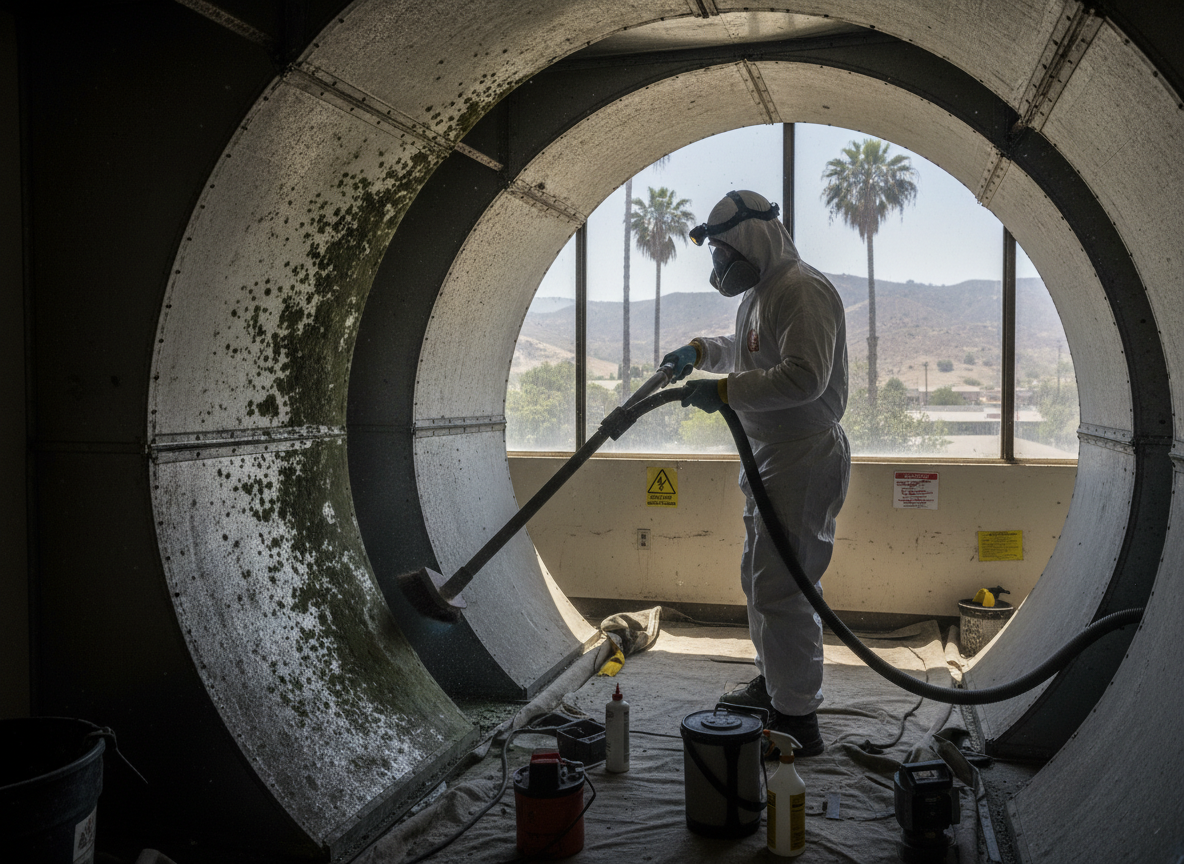
Ventilation mold remediation in Verdugo City requires isolating affected duct runs and registers while protecting the rest of the HVAC system. Mediterranean climate patterns with warm dry summers and mild winters allow condensation to linger in metal ducts during cooler nights, especially in homes built before the 1970s that line streets around Honolulu Avenue. Technicians use negative-air machines and HEPA filtration to capture spores without spreading them into living spaces, then apply EPA-registered antimicrobials approved for HVAC components. Edge cases include flex duct that has absorbed moisture into the insulation layer, which often must be cut out rather than cleaned.
Older housing stock in Verdugo City and nearby La Crescenta-Montrose frequently features single-story ranch homes with attic-mounted furnaces where return-air plenums sit close to roof leaks. Mild winter rains can introduce water that evaporates slowly under insulation, feeding mold growth that only becomes visible once summer heat pushes spores through supply vents. Remediation crews inspect every accessible boot and elbow with borescopes, then seal access points with mastic rather than standard tape to prevent future moisture entry. Homeowners are advised to replace fiberglass filters with pleated media after service to reduce static pressure that can dislodge remaining particles.
Code considerations in Los Angeles County require that any work disturbing more than ten square feet of mold in HVAC systems be documented and that occupants with respiratory conditions be notified before containment is breached. Technicians verify airflow balance after cleaning because over-cleaned ducts can create negative pressure that pulls air from crawl spaces or garages. In Verdugo City terrain, homes on slight slopes sometimes route condensate lines uphill, creating standing water that recontaminates cleaned lines within weeks if the trap dries out during summer.
Technician insight
In Verdugo City, the thing that catches most people out with ventilation mold remediation is how mild winters let roof leaks around older single-story homes on slopes near Honolulu Ave drip into attic ducts that then stay damp all summer because the dry air never fully dries the insulation layer.
Hidden Duct Mold After Winter Rain
A Verdugo City homeowner noticed musty air from vents after several mild winter storms. Inspection found water had entered an attic return plenum through a small roof leak common on sloped lots near La Crescenta-Montrose. Crews isolated the system, removed saturated flex runs, cleaned the metal trunk lines, and sealed the access points. Airflow was restored without spore migration into living areas.
How it works
- 1
Initial Containment Setup
Technicians establish negative pressure at the air handler and seal off supply and return runs using plastic sheeting and tape.
- 2
Inspection and Mapping
Borescope and moisture meter readings identify every affected section of ductwork, noting which runs serve bedrooms versus common areas.
- 3
Source Removal and Cleaning
HEPA vacuuming and mechanical brushing remove visible growth; heavily contaminated flex duct sections are removed and replaced.
- 4
Antimicrobial Application and Drying
EPA-registered products are fogged through the system, followed by dehumidification to bring duct surfaces below 60 percent relative humidity.
- 5
Final Verification and Reassembly
Post-cleaning inspection confirms no visible mold remains and airflow is restored before the system is returned to normal operation.
Pricing
Pricing varies by the number of affected runs and whether flex duct replacement is required; upfront quotes provided after inspection.