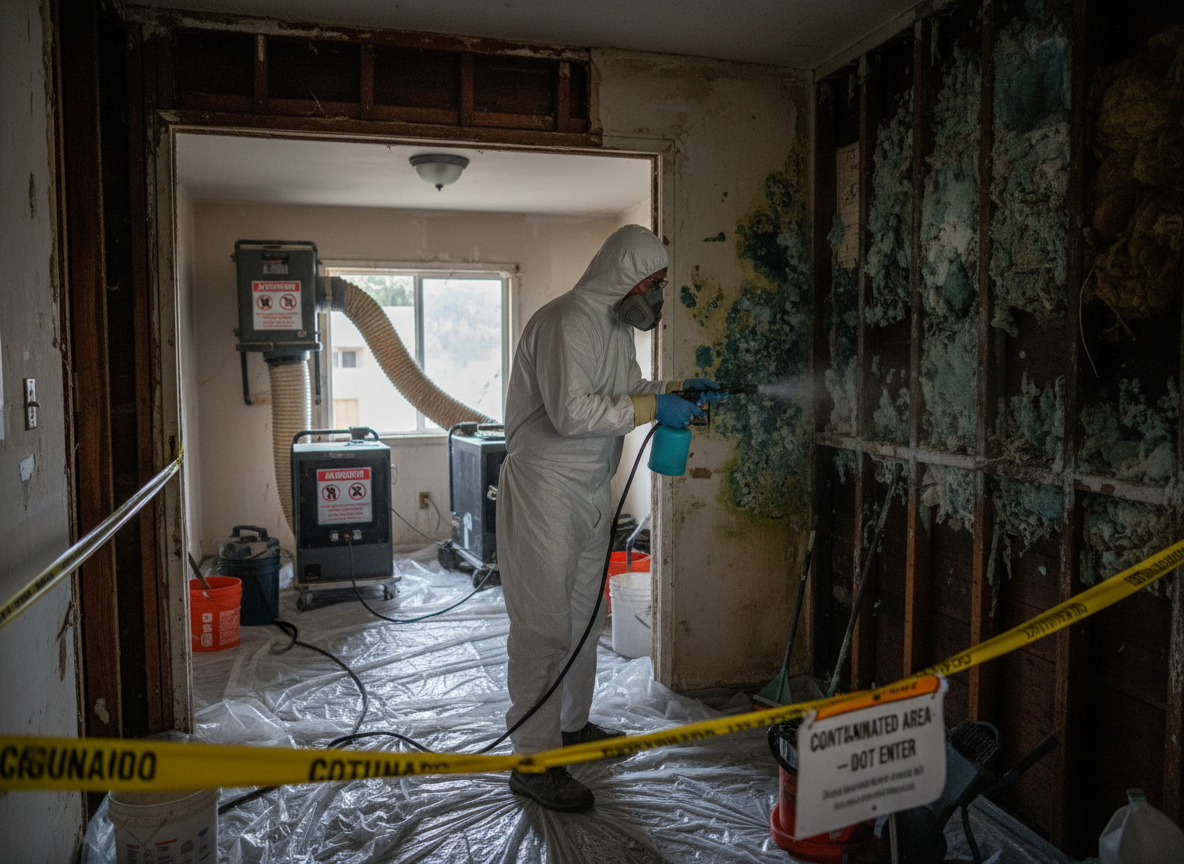
Verdugo City sits in the foothills of Los Angeles County where homes from the 1950s through 1970s often feature plaster walls and crawl spaces that trap moisture from occasional winter rains. These conditions allow toxic mold to develop behind baseboards and under flooring long before visible signs appear. Remediation crews must pull back layers of material carefully to reach colonies without spreading spores into living areas, especially when summer heat drives rapid drying that can crack surfaces and release particles.
The Mediterranean climate here brings warm dry summers that mask ongoing moisture issues until a pipe leak or roof penetration from winter storms creates pockets of growth. Technicians check HVAC ducts and attic insulation common in single-story ranch homes near Honolulu Avenue because spores travel easily through these systems. Containment barriers and negative air machines become essential when working close to neighboring properties in dense Verdugo City blocks.
Local terrain with its slight slopes means water can pool against foundations during rare heavy rains, pushing mold into lower wall cavities. Crews test for hidden moisture with meters before any demolition and dispose of contaminated materials according to Los Angeles County guidelines to avoid cross-contamination during transport through nearby Glendale streets.
Seasonal Moisture Patterns
Winter rains followed by dry summers create cycles where mold stays dormant then reactivates, requiring year-round readiness for calls from La Crescenta Montrose residents dealing with similar issues.
Technician insight
In Verdugo City, the thing that catches most people out with toxic mold removal is moisture trapped under 1960s slab foundations after mild winter rains, where the dry summers hide the problem until odors reach living spaces and force larger demolition than homeowners expect.
Crawl Space Growth After Winter Leak
A Verdugo City homeowner noticed a musty smell in the hallway after seasonal rains. Inspection revealed toxic mold spreading from a foundation crack into insulation beneath the 1965 home. Containment was set, affected materials removed, and the space dried before repairs to stop recurrence.
How it works
- 1
Initial Assessment
Inspect affected areas in Verdugo City homes using moisture meters and visual checks for hidden colonies behind walls and in crawl spaces.
- 2
Containment Setup
Install plastic barriers and negative air machines to prevent spore spread into unaffected rooms common in older local housing.
- 3
Removal and Cleaning
Remove contaminated materials, HEPA vacuum surfaces, and treat remaining areas with antimicrobial solutions suited to Mediterranean climate conditions.
- 4
Drying and Verification
Dry the space thoroughly and conduct post-remediation testing before allowing reentry to homes near Glendale.
Pricing
Cost depends on square footage affected, depth of hidden growth, and access challenges in older Verdugo City homes.