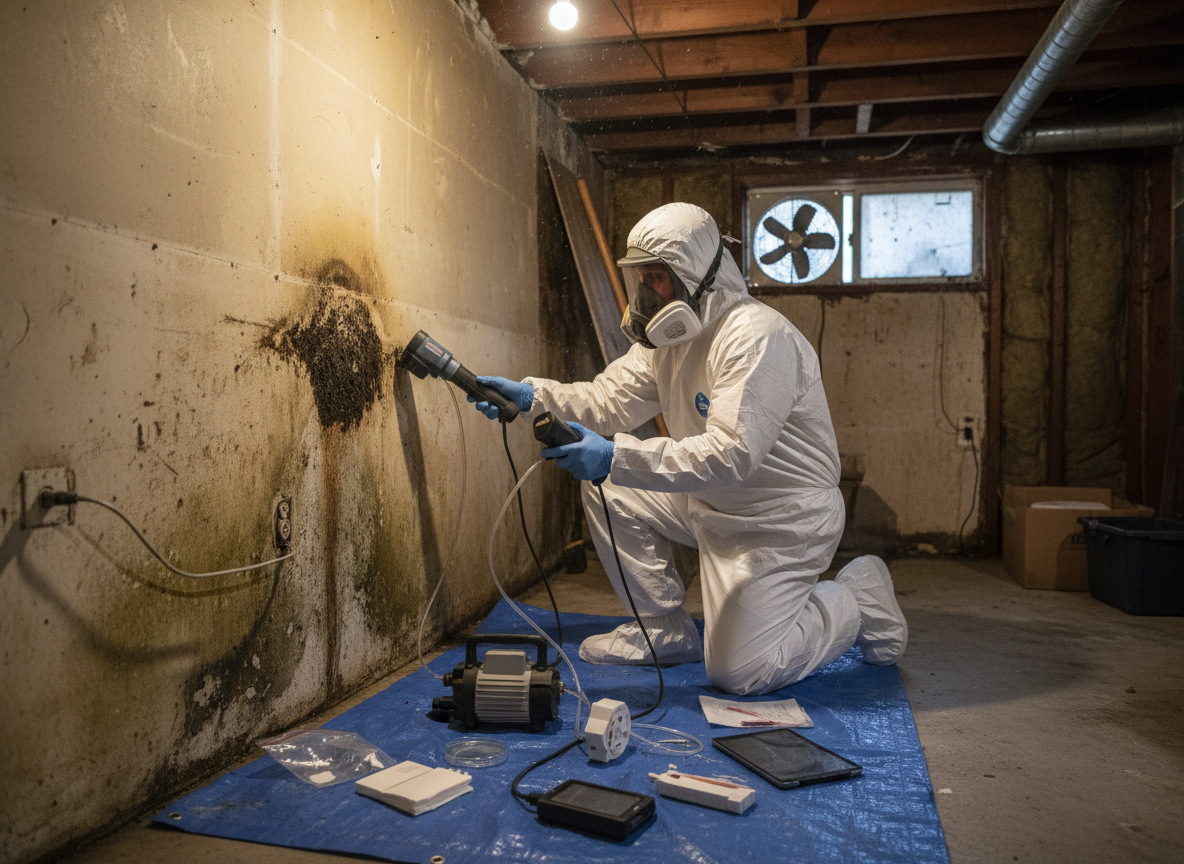
Verdugo City sits in the foothills with a Mediterranean climate of warm dry summers and mild winters. This pattern often hides moisture problems in attics and crawl spaces of mid-century stucco homes common along Honolulu Avenue and surrounding ridges. Slow roof leaks from winter rains can persist undetected until spores appear in living areas. Testing focuses on air and surface samples from these specific zones because drywall and insulation in these houses trap humidity differently than newer builds in La Crescenta Montrose.
Sampling protocols account for the terrain. Steep lots in Verdugo City direct water toward foundations during rare heavy rains, creating edge cases where mold grows behind baseboards or in subfloor cavities. Technicians use moisture meters and borescopes to check these spots without unnecessary demolition. Reports include spore counts compared against outdoor baselines from nearby Glendale to distinguish normal outdoor infiltration from active indoor colonies.
Homeowners sometimes confuse visible staining with active mold. In Los Angeles County properties, settled dust or water stains from past leaks can look similar but test negative. Proper testing requires multiple samples across rooms plus control samples from outside to avoid false positives that lead to unneeded work.
Technician insight
In Verdugo City, the thing that catches most people out with Residential mold testing is how the mild winters let small leaks in older hillside stucco homes along the Verdugo Mountains build hidden moisture in attics that only shows up after spores reach bedrooms.
Attic Leak Testing Near Honolulu Ave
A Verdugo City homeowner reported a musty smell after winter rains. Testing revealed elevated spores from a slow roof leak above the master bedroom. Air samples from the attic and living space confirmed the source. The report outlined targeted removal steps that resolved the issue without affecting the rest of the house.
How it works
- 1
Initial Walkthrough
Inspect all accessible areas of the home including attics, crawl spaces, and bathrooms for visible signs and musty odors.
- 2
Sample Collection
Take air and surface samples from suspect locations plus outdoor controls using calibrated equipment.
- 3
Laboratory Analysis
Send samples for independent lab identification of mold types and concentration levels.
- 4
Detailed Report
Deliver findings with photos, spore counts, and specific recommendations tailored to the property's construction.
Pricing
Cost depends on square footage, number of samples, and access difficulty in hillside homes.