Verdugo City sits in Los Angeles County with a Mediterranean climate of warm dry summers and mild winters that still allow winter rains to penetrate older plaster and lath construction common along Honolulu Avenue and nearby streets. These homes often lack modern vapor barriers, letting moisture reach insulation or subfloor cavities where mold colonies release volatile organic compounds that travel through HVAC returns and create odors in living spaces even when visible growth is absent.
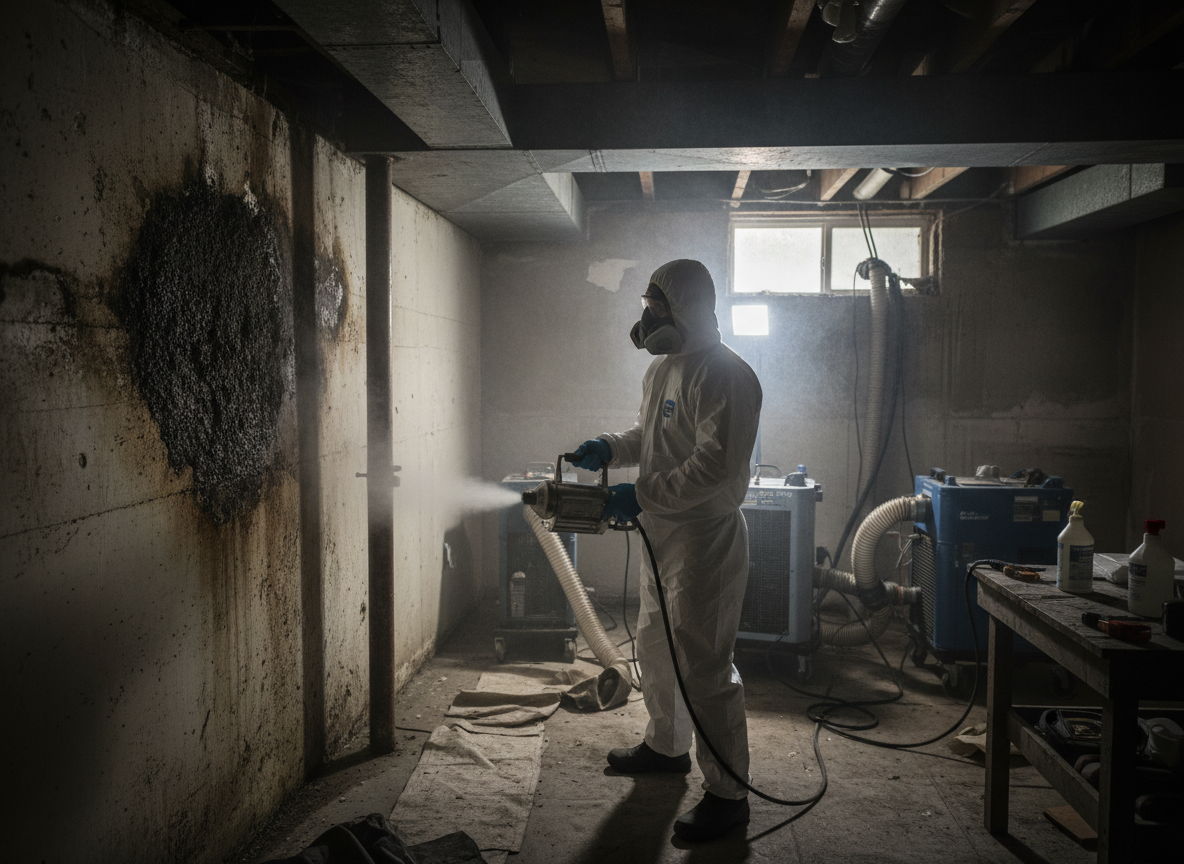
Standard bleach wipes or fogging alone fail here because the source remains trapped behind baseboards or in crawl spaces typical of 1940s-1960s builds in the Verdugo City and La Crescenta-Montrose pockets. Proper odor removal requires negative-air containment, HEPA vacuuming of affected cavities, and application of antimicrobial encapsulants followed by hydroxyl or ozone treatment calibrated to the home's square footage and airflow patterns to neutralize residual spores without driving them deeper into porous materials.
Glendale border properties frequently share drainage patterns that direct runoff toward foundations during rare heavy rains, increasing basement and utility room odor complaints. Technicians must map these micro-terrain flows and test air samples from multiple rooms before and after treatment to confirm odor sources are eliminated rather than masked, especially when shared walls with neighboring units complicate containment.
Homeowners in Verdugo City often mistake seasonal dry-rot smells for simple humidity issues, delaying intervention until odors migrate into carpet padding or drywall paper facing. Addressing the full odor pathway includes removing and replacing saturated underlayment, sealing concrete slabs with moisture barriers, and verifying clearance through third-party air testing to prevent recurrence during the next winter rain cycle.
Technician insight
In Verdugo City the thing that catches most people out with odor removal mold is how the mild winters let small roof or window leaks soak into plaster walls without obvious water stains, then the dry summers bake the smell into the cavities so it only shows up when the furnace kicks on.
Hidden Wall Odor After Winter Rain
A Verdugo City homeowner near Honolulu Ave noticed a musty smell in the living room each evening. Inspection found a slow roof leak that had soaked insulation behind a shared wall with the neighboring unit. Crews contained the room, removed saturated material, treated the cavity, and ran hydroxyl equipment until air samples cleared. The odor disappeared and did not return during the next rain.
How it works
- 1
Initial Assessment And Air Sampling
Technicians arrive 24/7 at the Verdugo City address, conduct moisture mapping with infrared cameras, and collect air samples from multiple rooms to locate hidden colonies driving the odor.
- 2
Containment And Source Removal
Negative-air machines isolate affected zones while crews open cavities, remove saturated insulation or drywall, and extract moldy material without dispersing spores into living areas.
- 3
Odor Neutralization Treatment
Hydroxyl generators or calibrated ozone units run in contained spaces to break down remaining VOCs in porous surfaces, followed by antimicrobial encapsulation on cleaned substrates.
- 4
Clearance Testing And Restoration
Post-treatment air samples confirm odor reduction, then cavities are sealed and any removed finishes are replaced to restore the home's original condition.
Pricing
Cost depends on square footage affected, depth of hidden growth, and whether HVAC cleaning is required; upfront quotes follow inspection.