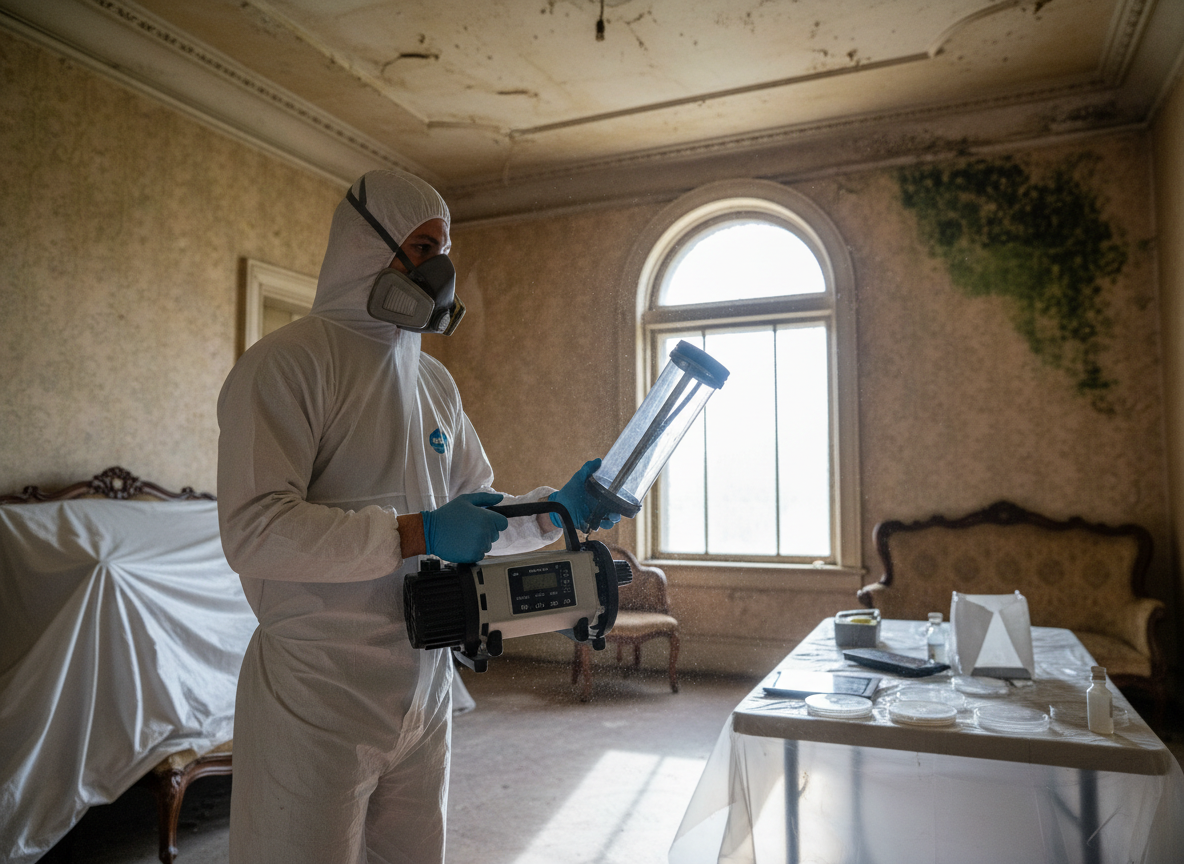
Verdugo City sits in the foothills of the San Gabriel Mountains within Los Angeles County, where the Mediterranean climate brings warm dry summers and mild winters that allow moisture to linger inside walls and attics after rare winter rains. Older housing stock from the mid-twentieth century, common between Honolulu Avenue and the surrounding neighborhoods, often features plaster and lath construction with limited ventilation that traps spores from seasonal humidity spikes. Professional spore testing here requires air sampling at multiple points indoors and outdoors to compare counts accurately, because outdoor Mediterranean air already carries baseline mold levels that can mask indoor problems if not measured correctly.
Testing must account for the terrain where homes back up against slopes that funnel runoff toward foundations during winter storms. In areas bordering La Crescenta Montrose and Glendale, many properties share similar age and construction patterns that create consistent hidden moisture pockets behind cabinets and in crawl spaces. A single sample rarely tells the full story; technicians pull multiple samples from living areas, bathrooms, and exterior controls to map spore types such as Aspergillus or Stachybotrys that thrive in the region's occasional damp periods. Homeowners often overlook how mild winters prevent full drying cycles, allowing colonies to persist undetected until air quality complaints arise.
Local regulations in Los Angeles County require documented sampling protocols before any remediation plan can move forward, especially when real estate transactions are involved. Edge cases appear in homes near the Verdugo City address at 2820 Honolulu Ave where hillside drainage issues combine with older HVAC systems to circulate spores throughout the structure. Proper testing identifies not only presence but concentration gradients that guide targeted inspection rather than blanket removal assumptions.
Technicians familiar with the area know that dry summer conditions can make visible mold disappear while airborne spores remain elevated from previous moisture events. This demands calibrated equipment and chain-of-custody handling to produce results accepted by local inspectors and insurers.
Technician insight
In Verdugo City the thing that catches most people out with mold spore testing is assuming dry summer weather means no problem. Mild winters and older hillside homes near Glendale let moisture sit behind plaster long enough to keep spore levels high even when nothing looks wet.
Hidden Spores in Foothill Home
A Verdugo City homeowner noticed musty odors after winter rains but saw no visible mold. Sampling revealed elevated Aspergillus levels indoors compared to the outdoor control taken near the San Gabriel Mountain slopes. Additional samples from the attic and behind kitchen cabinets traced the source to poor drainage along the foundation. The report allowed targeted inspection without unnecessary wall demolition.
How it works
- 1
Initial Consultation
Discuss symptoms and property history over the phone or on site at 2820 Honolulu Ave to determine sampling locations.
- 2
On-Site Air Sampling
Collect indoor and outdoor spore samples using calibrated pumps across multiple rooms and control points.
- 3
Laboratory Analysis
Send samples to an accredited lab for genus identification and concentration counts specific to Los Angeles County conditions.
- 4
Detailed Report Delivery
Provide written findings with comparisons to outdoor baselines and recommendations for next steps.
Pricing
Cost depends on number of samples required and property size; typical jobs in Verdugo City range from a few hundred dollars upward based on complexity.