Verdugo City sits in the foothills of Los Angeles County where Mediterranean weather brings most rainfall between November and March. Older single-family homes built before 1970 often have unvented crawl spaces and roof leaks that allow water to pool under flooring or in attic insulation. These conditions create hidden mold colonies that standard visual checks miss until residents notice musty odors or respiratory irritation during the dry summer months when HVAC systems recirculate air.
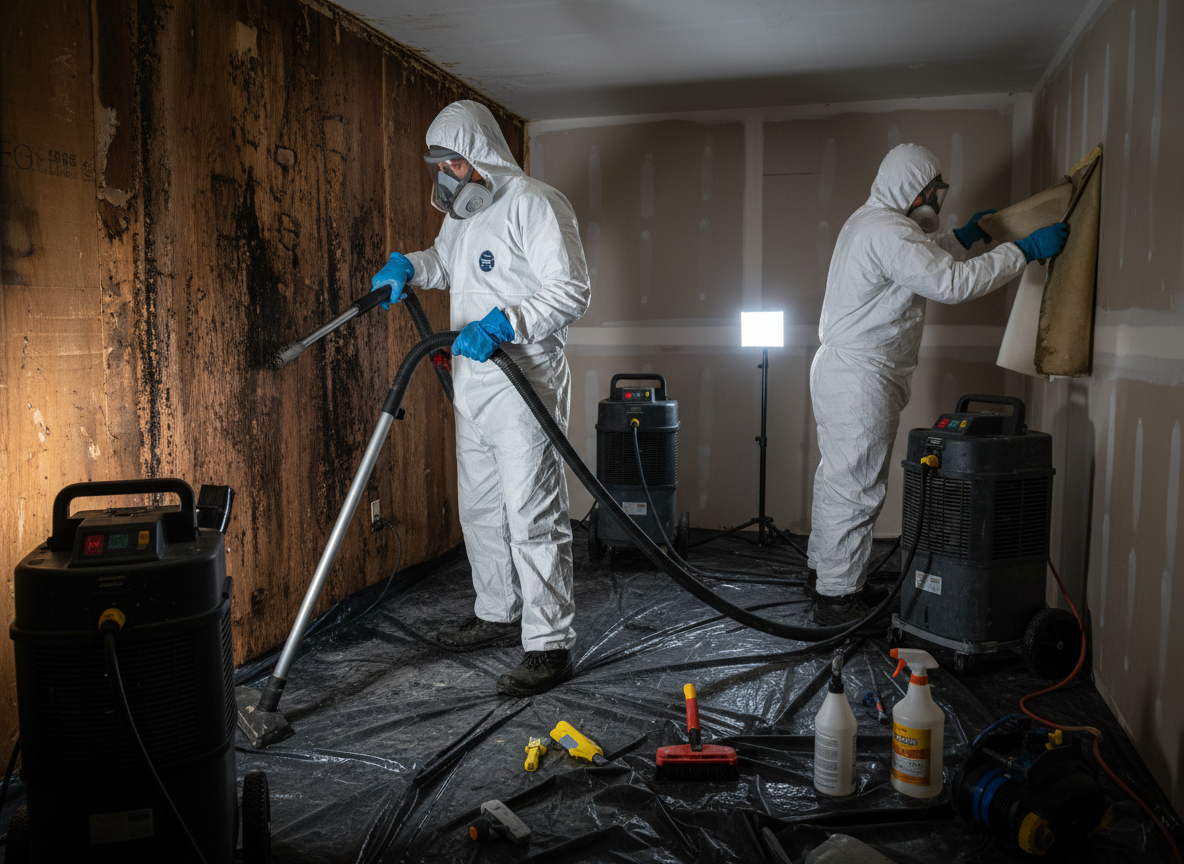
Remediation work here requires strict containment because many properties sit on sloped lots that channel winter runoff toward foundations. Technicians use negative air machines and physical barriers to prevent spores from migrating into living spaces while removing affected drywall, baseboards, and insulation. Post-removal verification includes moisture meter readings on concrete slabs common in Verdugo City construction and air sampling to confirm levels return to normal before any reconstruction begins.
Homeowners in nearby La Crescenta Montrose and Glendale frequently encounter the same issues because the shared microclimate and similar housing stock produce comparable moisture problems. Addressing the source, such as repairing flashing around chimneys or improving drainage on steep driveways, prevents recurrence more reliably than surface treatments alone. Work performed without source correction often leads to callbacks within one or two rainy seasons.
Technician insight
In Verdugo City, the thing that catches most people out with mold remediation near me is older homes on sloped lots where winter rain runs toward the foundation and stays trapped under slab-on-grade floors. Homeowners often treat visible spots in bathrooms but miss the real source behind baseboards because the mild winters never fully dry the soil against the house.
Hidden Growth After Roof Leak
A homeowner in Verdugo City noticed a musty smell in the hallway after heavy January rain. Inspection found water had entered through aging flashing and wicked into drywall behind a closet. Crew removed the wet sections, dried the cavity, and confirmed clearance with air samples before the owner scheduled repairs.
How it works
- 1
Initial Assessment
Technician inspects affected areas, checks moisture levels in walls and floors, and identifies hidden growth behind cabinets or in attics common to Verdugo City homes.
- 2
Containment Setup
Plastic barriers and negative air pressure isolate the work zone so spores do not spread to unaffected rooms during removal.
- 3
Removal And Cleaning
Damaged materials are cut out, surfaces are HEPA vacuumed and treated, then dried with dehumidifiers suited to the mild winter temperatures.
- 4
Verification And Clearance
Moisture readings and air samples confirm the space meets clearance criteria before barriers come down.
Pricing
Upfront quotes based on square footage, depth of growth, and access difficulty; no standard flat rate applies across all Verdugo City properties.