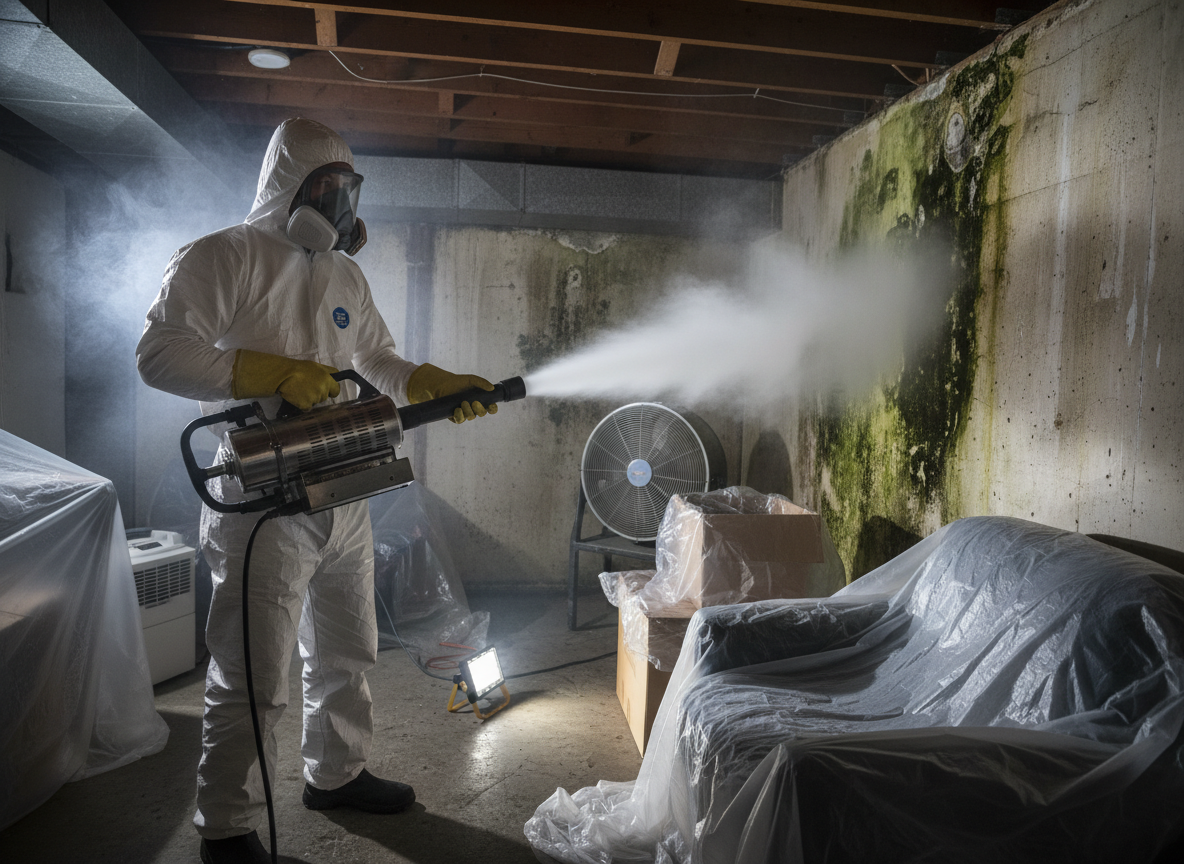
Mold fogging treatment disperses EPA-registered antimicrobial agents through HVAC systems and wall cavities in Verdugo City properties built before 1970. These homes often feature lath-and-plaster walls and limited attic ventilation that trap condensation during the mild winters typical of the Mediterranean climate. Fog particles under 10 microns penetrate behind baseboards and into crawl spaces where surface cleaning alone leaves colonies intact. Technicians monitor humidity with psychrometers before and after application to confirm moisture sources are addressed first.
In the dry summer months, airborne spores from nearby Glendale hillsides can re-enter through unsealed vents once fogging is complete. Proper protocol requires sealing the structure for two hours then using negative air machines to exhaust residue. Homeowners in La Crescenta Montrose neighborhoods frequently overlook the need to clean or replace HVAC filters afterward, allowing re-contamination within weeks. The process avoids bleach solutions that damage wood framing common in local ranch-style houses.
Edge cases include stucco exteriors on slopes where irrigation runoff creates hidden wall moisture. Fogging alone will not resolve these without correcting grading. Los Angeles County building codes require documentation of containment methods when work occurs near occupied spaces. Technicians always verify electrical shutoff before introducing conductive fog solutions into older knob-and-tube wiring areas still present in some Verdugo City blocks.
Technician insight
In Verdugo City, the thing that catches most people out with mold fogging treatment is how the foothill homes built on slopes hold condensation in wall cavities long after the mild winter rains stop. Dry summers mask the problem until someone opens a closet and finds black growth behind the drywall. Skipping the moisture source fix before fogging just means the same colonies return within a season.
Hidden Attic Growth After Winter Rain
A 1960s ranch house near Honolulu Avenue showed musty odors after February rains. Inspection found condensation in the unvented attic above the original plaster ceiling. Fogging reached the sheathing and rafters after sealing HVAC returns. Follow-up checks confirmed spore counts dropped and the odor did not return once ridge vents were added.
How it works
- 1
Inspection and Moisture Mapping
Technicians use moisture meters and infrared cameras to locate active water intrusion points in attics, walls, and crawl spaces typical of Verdugo City construction.
- 2
Containment Setup
Plastic barriers and negative air machines isolate the treatment zone to prevent spore migration into living areas during fog application.
- 3
Fog Application
EPA-registered fog is dispersed through HVAC registers and wall cavities, allowing particles to reach hidden surfaces behind plaster and insulation.
- 4
Ventilation and Verification
After dwell time, air scrubbers remove residue and post-treatment swabs confirm spore reduction before barriers are removed.
Pricing
Cost depends on square footage treated, HVAC access, and any required containment in multi-story homes; call for on-site assessment.