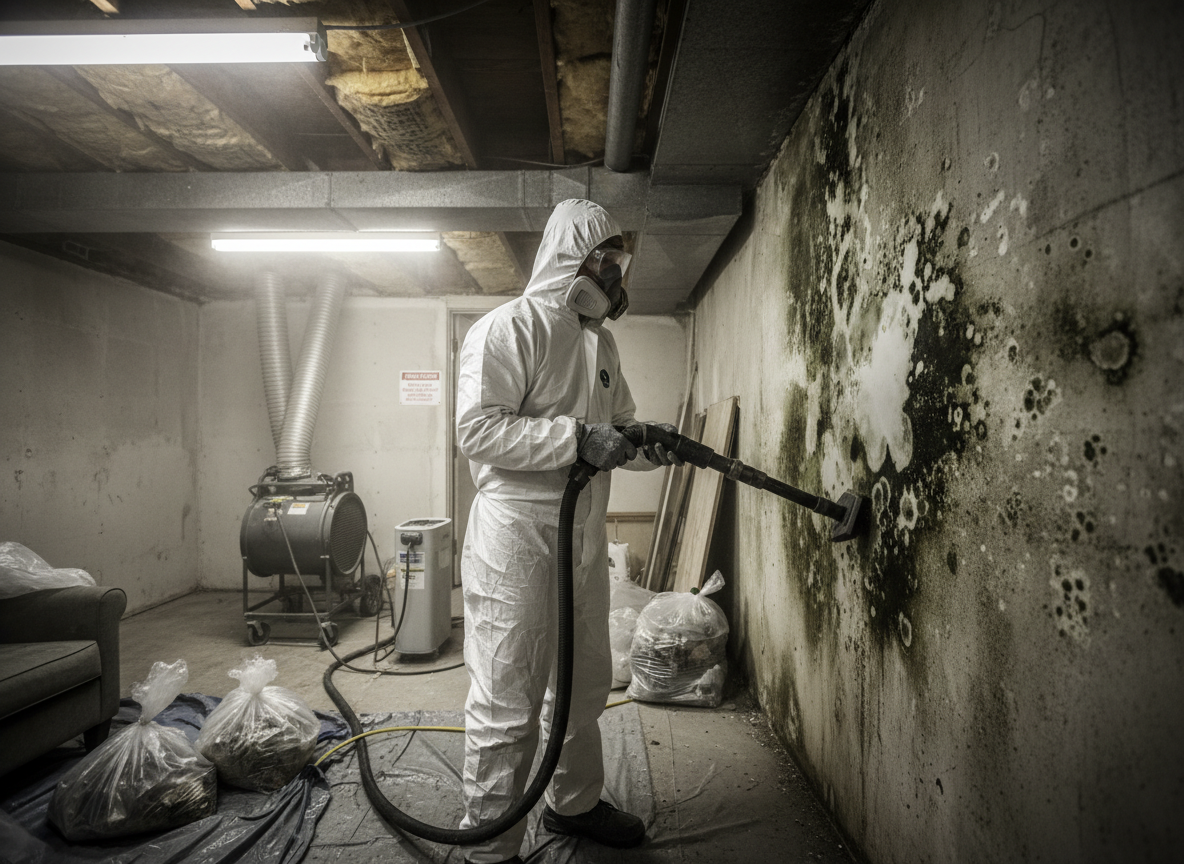
Verdugo City sits in Los Angeles County with a Mediterranean climate of warm dry summers and mild winters that still bring enough rain to drive moisture into older single-family homes and hillside properties. Many houses here date to the mid-twentieth century and feature crawl spaces or attics with limited ventilation where condensation and roof leaks create hidden growth. Abatement work therefore starts with mapping moisture sources rather than simply removing visible mold, because the dry summer months can mask ongoing problems until the next winter rains arrive.
Containment protocols must account for the close spacing of homes in Verdugo City and nearby La Crescenta Montrose, where shared walls and narrow lots make negative-air setups critical to prevent cross-contamination. Technicians use HEPA filtration and physical barriers before disturbing drywall or insulation, then remove affected materials and treat remaining surfaces with EPA-registered antimicrobials suited to porous substrates common in local construction. Post-remediation verification includes moisture readings and air sampling to confirm levels have returned to normal background, especially important when residents plan to reoccupy quickly.
Seasonal Moisture Patterns
Dry summers in Verdugo City reduce surface mold but allow trapped moisture behind stucco or in attics to persist until winter storms hit. Homeowners often discover growth only after noticing musty odors during the first rains, at which point the infestation may already extend into insulation or subflooring. Addressing the leak source before abatement prevents recurrence in these conditions.
Access Challenges in Local Housing
Hillside lots and narrow driveways common around Glendale borders limit equipment staging, so crews frequently work with smaller containment zones and hand-carry debris. Older plaster-and-lath walls also require more careful demolition to avoid spreading spores through existing HVAC runs that many Verdugo City homes still retain.
Technician insight
In Verdugo City the thing that catches most people out with mold abatement is how the mild winters let small roof or plumbing leaks stay wet long enough to colonize insulation in attics that stay shaded by the surrounding hills, something the dry summers never fully correct.
Hidden Attic Growth After Winter Leak
A Verdugo City homeowner noticed a musty smell after early rains. Inspection found water tracking from a flashing failure into cellulose insulation above the bedrooms. Containment was erected, saturated material removed, and the cavity dried before new insulation was installed. Follow-up readings confirmed the space stayed dry through the next storm cycle.
How it works
- 1
Initial Assessment
Technicians arrive within hours and use moisture meters and thermal imaging to locate hidden water intrusion in crawl spaces, attics, and wall cavities typical of Verdugo City homes.
- 2
Containment Setup
Plastic barriers and negative-air machines isolate the work area so spores do not migrate into living spaces or neighboring properties.
- 3
Removal and Cleaning
Affected materials are removed, surfaces are treated, and HEPA vacuuming follows to capture remaining particulates.
- 4
Drying and Verification
Dehumidifiers and air movers restore dry conditions, followed by post-remediation testing before clearance is issued.
Pricing
Cost depends on square footage affected, depth of hidden growth in older Verdugo City construction, and whether HVAC cleaning is required.