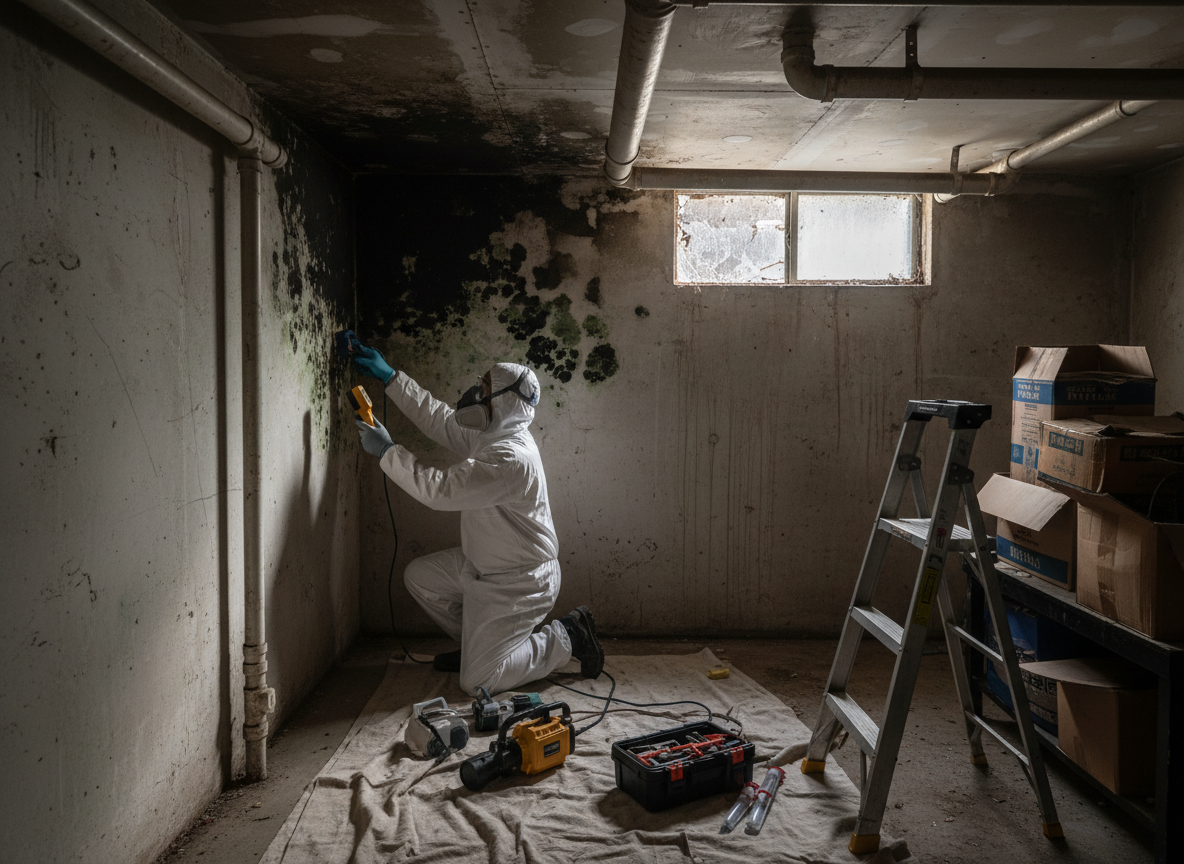
Verdugo City sits in the foothills of the Verdugo Mountains where older wood-frame and stucco homes built before 1970 are common. These structures often have vented attics and raised foundations that trap moisture during the mild winters when temperatures rarely drop below freezing yet humidity lingers. A proper inspection starts with checking roof penetrations, bathroom exhaust terminations, and the seams where stucco meets wood trim, because even small leaks from the dry summers can go unnoticed until winter condensation sets in.
Technicians use moisture meters and infrared cameras to scan drywall, insulation, and subflooring without unnecessary demolition. In neighborhoods bordering La Crescenta-Montrose and Glendale, hillside drainage patterns frequently direct runoff toward foundation walls, so inspectors pay special attention to grading and French drains. Air sampling is performed only when visible growth or musty odors are present, and samples are sent to independent labs rather than relying on instant-read devices that can miss hidden colonies behind cabinets or in HVAC returns.
Homeowners sometimes overlook the laundry rooms and under-sink areas where constant low-level humidity combines with the region’s occasional Santa Ana winds that push dust and spores into small gaps. Reports include labeled photos, moisture readings at each tested location, and clear recommendations on whether remediation or simple ventilation upgrades are needed. All findings reference Los Angeles County building practices rather than generic national standards.
Technician insight
In Verdugo City, the thing that catches most people out with Home mold inspection is the way mild winter nights let condensation form under the roof deck in pre-1960s homes on the north-facing slopes; homeowners check the bathroom ceiling but never think to look at the ridge vent area until the inspector pulls back insulation.
Attic Condensation in Verdugo City Home
A homeowner near Honolulu Avenue noticed a musty smell after the first winter rains. Inspection revealed elevated moisture along the north roof deck where older batt insulation had compressed. Thermal imaging confirmed cold spots at the ridge; surface samples were taken and the report recommended added insulation baffles plus improved ridge venting rather than full remediation.
How it works
- 1
Site Walk and Interview
Owner describes any musty smells, recent leaks, or health symptoms while the technician notes home age, construction type, and recent weather exposure.
- 2
Exterior and Drainage Check
Grading around the foundation, roof edges, and downspout discharge are examined for patterns common on Verdugo City hillsides.
- 3
Interior Moisture Mapping
Non-invasive meters and thermal imaging scan walls, ceilings, and floors with emphasis on bathrooms, laundry areas, and attic access points.
- 4
Sampling and Documentation
Surface or air samples are collected only where readings indicate concern; every location is photographed and logged with exact moisture percentages.
- 5
Written Report Delivery
Findings and next-step options are explained on site or via email within 24 hours, including any Los Angeles County permit considerations.
Pricing
Cost depends on square footage, number of stories, and whether attic or crawlspace access is required; upfront quotes given after the initial phone description.