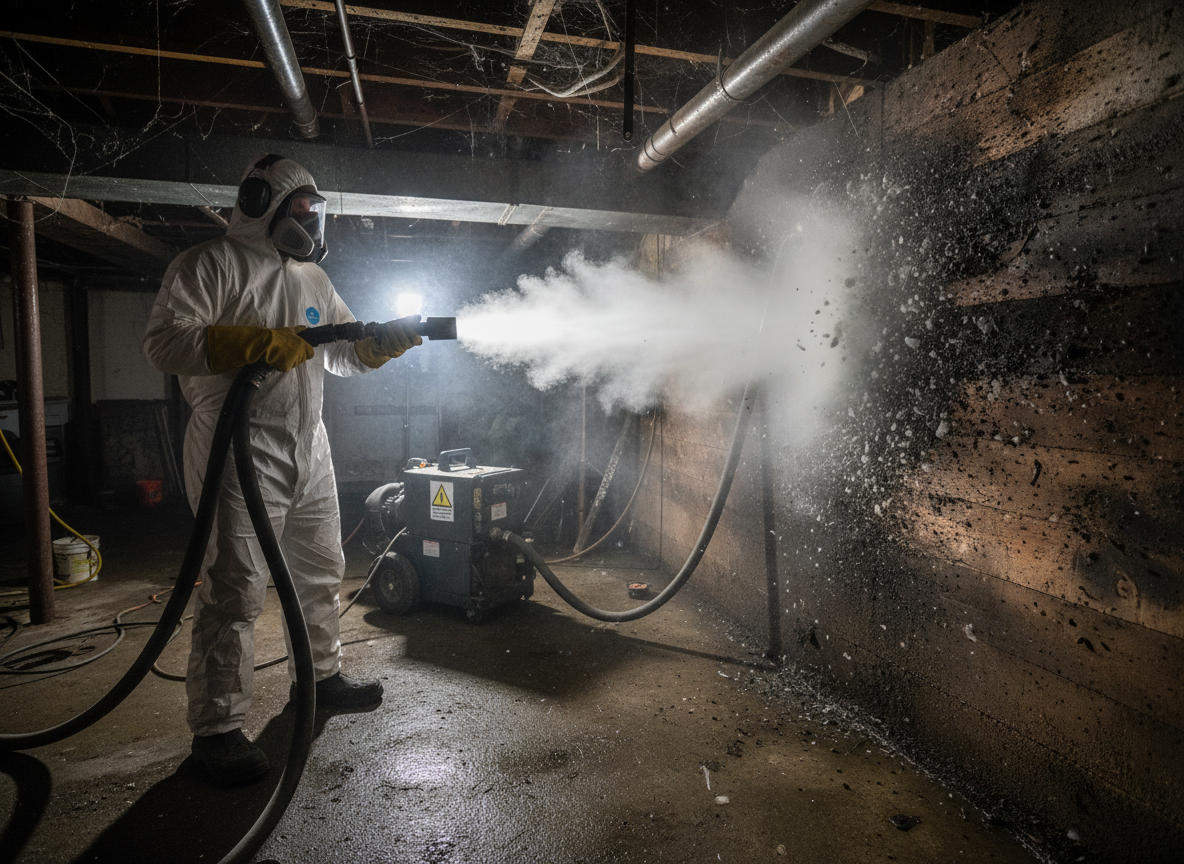
Dry ice blasting works well in Verdugo City because the Mediterranean climate brings warm dry summers followed by mild winters that allow hidden moisture to persist in older hillside homes near Honolulu Avenue. The process fires rice-sized CO2 pellets at 200-300 psi so they flash to gas on impact, lifting mold from joists, subfloors and duct interiors without introducing water that could restart growth during the next wet period. Technicians from 2820 Honolulu Ave keep equipment mobile and arrive 24/7 when residents notice musty odors after winter rains.
Surface preparation matters on local stock built before modern vapor barriers. Operators mask adjacent finishes, seal HVAC returns and run negative air machines to capture loosened spores before they settle into neighboring rooms. In La Crescenta Montrose and Glendale border properties the same method reaches crawl-space rim joists and attic sheathing where conventional sanding would damage aged lumber or release lead paint dust. Post-blast HEPA vacuuming and moisture metering confirm the substrate is ready for sealing or repair.
Edge cases include stucco-clad homes on sloped lots where water migrates behind plaster; blasting removes surface growth but the crew still traces the leak source to prevent recurrence. The technique leaves no chemical residue, an advantage when work occurs near kitchens or finished living spaces common in Verdugo City neighborhoods.
Operators monitor pellet feed rate and nozzle distance to avoid etching soft woods or dislodging loose mortar in older foundations. After treatment the property receives a final walkthrough so owners can see the cleaned surfaces before any encapsulation coatings are applied.
Technician insight
In Verdugo City the thing that catches most people out with dry ice blasting mold is older hillside homes where winter rains pool against stucco foundations and the mold travels up rim joists into the subfloor; if you only blast the visible patch the spores return the next mild winter because the water path stays open.
Hidden Attic Growth After Winter Rain
A Verdugo City homeowner noticed a musty smell in the upstairs hallway after several weeks of mild winter rain. Inspection found mold on roof sheathing and rafters above a bathroom vent leak. Dry ice blasting cleared the growth from the wood without damaging insulation or drywall below. Negative air ran for the duration and final moisture checks confirmed the sheathing had dried.
How it works
- 1
Site Assessment
Technicians inspect affected rooms, measure moisture levels and map hidden growth in attics, crawl spaces and wall cavities typical of Verdugo City hillside homes.
- 2
Containment Setup
Plastic barriers and negative air machines isolate the work zone to keep spores from drifting into living areas during blasting.
- 3
Dry Ice Blasting
CO2 pellets are propelled at controlled pressure to remove mold from wood, concrete and metal without abrasion or added moisture.
- 4
Final Cleaning and Verification
HEPA vacuuming and surface sampling confirm removal; any remaining moisture issues are noted for follow-up repairs.
Pricing
Cost depends on square footage, access difficulty and whether hidden cavities require additional demolition; call 24/7 for an on-site assessment.