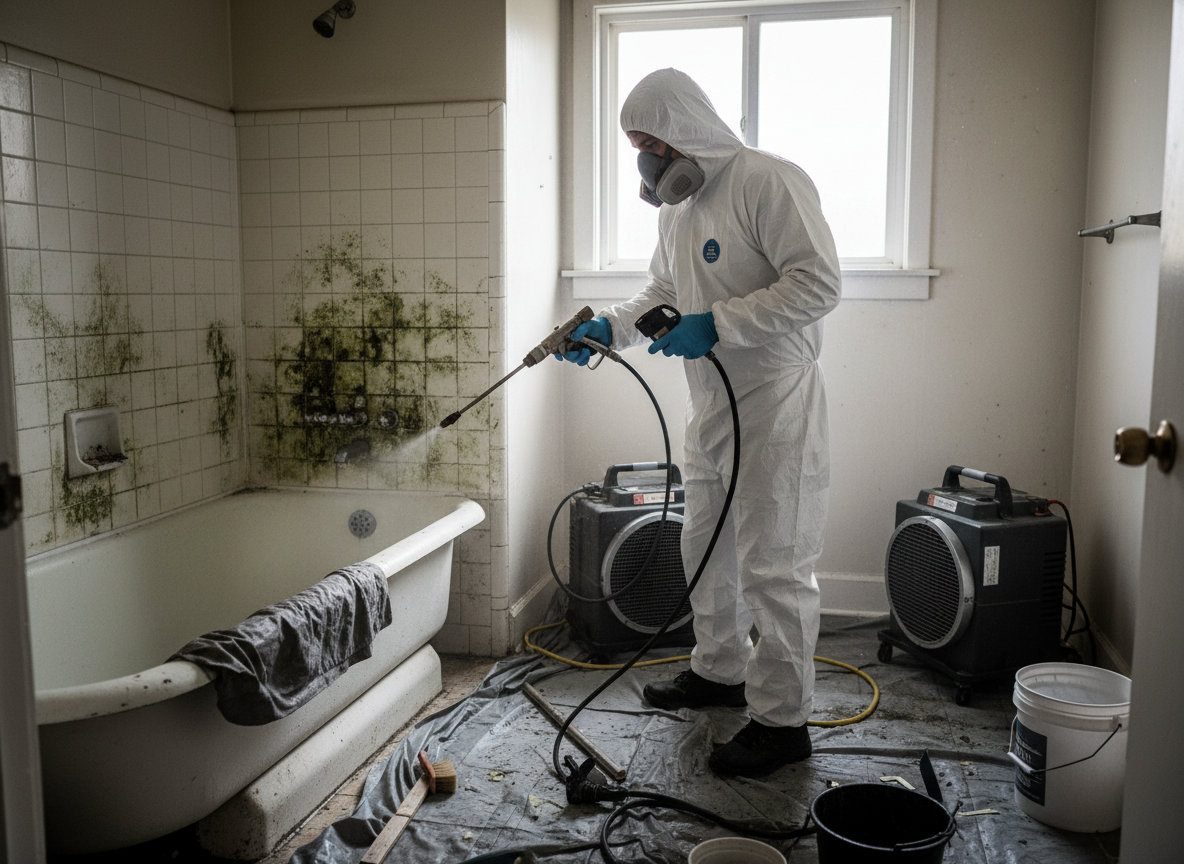
Bathrooms in Verdugo City homes often develop mold where grout lines and shower pans meet older plaster or drywall installed before modern moisture barriers became standard. The area's Mediterranean climate keeps summers dry enough that surface growth can appear controlled while moisture trapped behind fixtures continues to feed colonies along the Verdugo Mountains foothills. Technicians check for hidden saturation by removing baseboards and using moisture meters on subfloors, because mild winters prevent rapid drying that might occur in hotter inland zones.
Common edge cases include mold migrating into adjacent linen closets or HVAC returns when exhaust fans lack proper backdraft dampers. Los Angeles County building codes require negative air pressure during removal in occupied residences, so crews set up containment barriers and HEPA filtration before disturbing tile or caulk. In homes near Honolulu Avenue, narrow crawl spaces limit access, forcing the use of flexible inspection cameras rather than full demolition when growth stays localized to the tub surround.
Drying protocols differ here because low winter humidity can mask remaining moisture in wood framing. After physical removal, dehumidifiers run until readings drop below 12 percent on adjacent studs, followed by antimicrobial treatment on exposed surfaces. Homeowners receive guidance on fan runtime and sealant choices that hold up to the region's occasional Santa Ana winds pushing dust into bathrooms.
Technician insight
In Verdugo City, the thing that catches most people out with bathroom mold removal service is how the mild winters let moisture sit behind 1960s-era tile in homes along Honolulu Avenue without triggering obvious ceiling stains until the growth reaches the linen closet.
Hidden Growth Behind Shower Pan
A homeowner in Verdugo City noticed musty odor after a winter rain. Inspection revealed water had wicked under the original shower pan into the subfloor. Crew contained the room, removed the pan and saturated joists, dried the structure, and reinstalled with new waterproofing. Odor resolved and no recurrence reported after six months.
How it works
- 1
Initial Assessment
Technician inspects all bathroom surfaces, measures moisture levels in walls and floors, and identifies the water source feeding the mold.
- 2
Containment Setup
Plastic barriers and negative air machines isolate the bathroom to prevent spores from reaching living areas or HVAC systems.
- 3
Removal and Cleaning
Affected drywall, caulk, and grout are removed; remaining surfaces receive HEPA vacuuming and antimicrobial application.
- 4
Drying and Verification
Industrial dehumidifiers and air movers run until moisture readings meet safe thresholds, followed by post-remediation testing.
- 5
Prevention Recommendations
Client receives specific instructions on exhaust fan use, sealant products, and ventilation adjustments suited to local weather patterns.
Pricing
Cost depends on square footage affected, depth of hidden growth, and whether tile or subfloor replacement is required; upfront quote follows inspection.