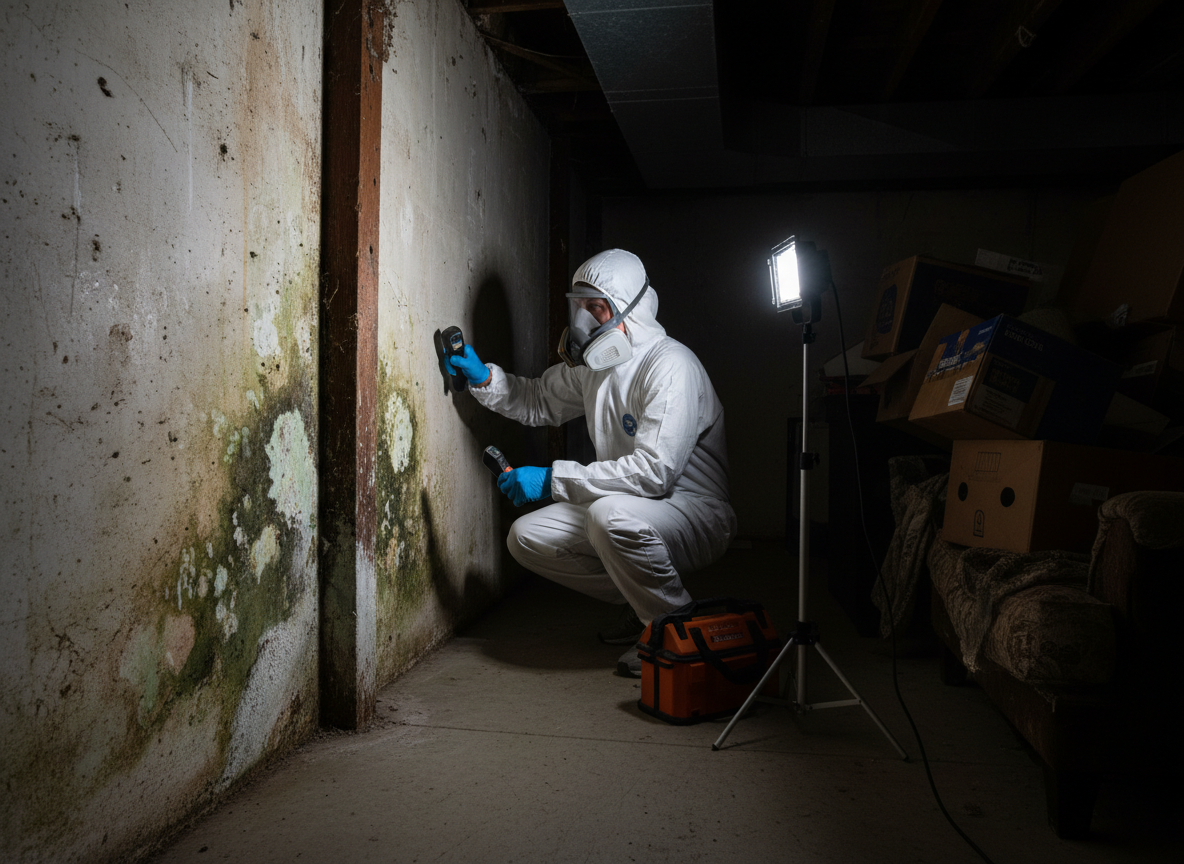
Basement mold inspection in Verdugo City homes requires checking for moisture that enters through concrete foundations during the mild winter rains typical of the region's Mediterranean climate. Many properties built before 1970 in the Verdugo foothills sit on slopes where water migrates along the terrain and pools against lower walls. Inspectors look for efflorescence on block walls, musty odors behind stored items, and elevated readings on moisture meters placed at floor-wall junctions. Early detection prevents spores from traveling through HVAC returns into living areas above.
Los Angeles County building practices in Verdugo City often left basements without proper exterior waterproofing or French drains. This creates edge cases where mold grows on the back side of drywall even when visible surfaces appear dry. Technicians use infrared cameras to locate temperature differentials caused by hidden water and take air samples from multiple zones to map spore distribution. Homeowners should avoid disturbing suspected areas before testing because disturbance can release concentrated spores into the space.
Code requirements in the area call for addressing any moisture source before remediation begins. This means noting grading issues around the foundation, checking downspout discharge points that empty too close to the house, and verifying that crawl space vents remain clear. A full inspection documents all findings with photos and readings so the homeowner can see exactly which sections need attention and why certain materials must be removed rather than cleaned.
Technician insight
In Verdugo City, the thing that catches most people out with Basement mold inspection is how our mild winters still push enough rain down the slopes near the Verdugo Mountains to wick into older concrete foundations without obvious puddles. Homeowners often miss the grading around the back of the house that directs water straight to the basement wall.
Slope drainage issue in Verdugo City basement
A homeowner noticed a musty smell after winter rains. We found elevated moisture along the north wall where the yard sloped toward the foundation. Infrared imaging confirmed water behind the drywall. We documented the grading problem and provided a report the owner used to correct exterior drainage.
How it works
- 1
Initial Walkthrough
We examine the entire basement for visible staining, odors, and water stains while noting storage conditions and ventilation.
- 2
Moisture Mapping
Technicians use meters and infrared imaging on walls, floors, and ceilings to locate active or past moisture intrusion points.
- 3
Air and Surface Sampling
Samples are collected from multiple basement zones and sent for lab analysis to identify mold types and concentration levels.
- 4
Source Identification and Report
We trace moisture back to grading, drainage, or plumbing issues and deliver a written report with photos and recommendations.
Pricing
Upfront quotes based on square footage and access difficulty; most basement inspections fall into a standard range for single-family homes in Verdugo City.